
Computers
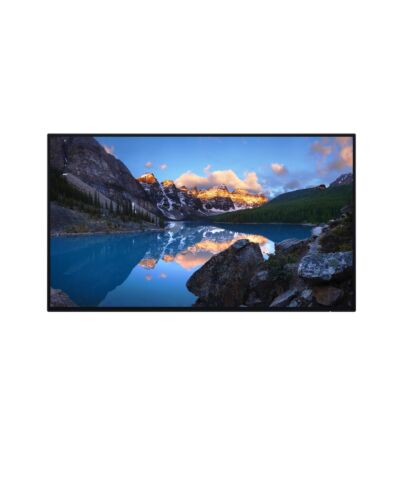
DELL UltraSharp U2424H_WOST computer monitor 60.5 cm (23.8") 1920 x 1080 pixels Full HD LCD Black, S
£172.43
Out of stock
- Immediately available
- Discreet Packaging
- Free Shipping
Product Details
Description
Experience improved visual comfort, enhanced productivity and extensive connectivity with this monitor by TÜV for 4-star eye comfort.
Key Features
- 60.5cm (23.8") Full HD 1920 x 1080 Edge LED IPS
- 8ms, 16:9, 250cd/m², 1000:1
- USB, HDMI, DisplayPort
Specifications
Display
Display diagonal*
60.5 cm (23.8")
Display resolution*
1920 x 1080 pixels
HD type*
Full HD
Native aspect ratio*
16:9
Display technology*
LCD
Panel type*
IPS
Backlight type
Edge LED
Touchscreen*
No
Display brightness (typical)
250 cd/m²
Response time*
8 ms
Anti-glare screen
Yes
Screen shape*
Flat
Supported graphics resolutions
640 x 480 (VGA), 720 x 400, 720 x 480, 800 x 600 (SVGA), 1024 x 768 (XGA), 1152 x 864 (XGA+), 1280 x 1024 (SXGA), 1280 x 720 (HD 720), 1600 x 900, 1920 x 1080 (HD 1080)
Supported video es
480p, 576p, 720p, 1080i, 1080p
Contrast ratio (typical)*
1000:1
Maximum refresh rate*
120 Hz
Viewing angle, horizontal
178°
Viewing angle, vertical
178°
Display number of colours*
16.7 million colours
Response time (fast)
5 ms
Pixel pitch
0.2745 x 0.2745 mm
Pixel density
92.53 ppi
Horizontal scan range
31 - 135 kHz
Vertical scan range
48 - 120 Hz
Viewable size, horizontal
52.7 cm
Viewable size, vertical
29.6 cm
Viewable size diagonal
60.5 cm
Display diagonal (metric)
60.47 cm
High Dynamic Range (HDR) supported
No
Surface hardness
3H
Colour gamut standard
DCI-P3
Colour gamut
85%
sRGB coverage (typical)
100%
Performance
NVIDIA G-SYNC*
No
AMD FreeSync*
No
Flicker-free technology
Yes
Low Blue Light technology
Yes
Multimedia
Built-in speaker(s)*
No
Built-in camera*
No
Design
Market positioning*
Business
Product colour*
Black, Silver
Front bezel colour
Black
Feet colour
Silver
Ports & interfaces
Built-in USB hub*
Yes
USB hub version
3.2 Gen 2 (3.1 Gen 2)
USB upstream port type
USB Type-C
Number of USB Type-C upstream ports quantity
1
USB Type-A downstream ports quantity
3
USB Type-C downstream ports quantity
1
HDMI*
Yes
HDMI ports quantity
1
HDMI version
1.4
DisplayPorts quantity
2
DisplayPort version
1.4
Headphone out*
Yes
Microphone in
No
PC Audio in
No
HDCP
Yes
HDCP version
1.4
AC (power) in
Yes
Network
Wi-Fi
No
Ergonomics
VESA mounting*
Yes
Panel mounting interface
100 x 100 mm
Cable lock slot*
Yes
Cable lock slot type
Kensington
Height adjustment*
Yes
Adjustable height (max)
15 cm
Pivot
Yes
Pivot angle
-90 - 90°
Swivelling
Yes
Swivel angle range
-45 - 45°
Tilt adjustment
Yes
Tilt angle range
-5 - 21°
On Screen Display (OSD)
Yes
Power
Energy efficiency class (SDR)*
F
Energy efficiency class (HDR)*
Not available
Energy consumption (SDR) per 1000 hours*
24 kWh
Power consumption (typical)*
13.7 W
Power consumption (standby)*
0.5 W
Power consumption (max)
72 W
Power consumption (off)
0.3 W
AC input voltage
100 - 240 V
AC input frequency
50/60 Hz
Input current
1.5 A
Power supply type
Internal
Energy efficiency scale
A to G
Operational conditions
Operating temperature (T-T)
0 - 40 °C
Storage temperature (T-T)
-20 - 60 °C
Operating relative humidity (H-H)
10 - 80%
Storage relative humidity (H-H)
5 - 90%
Operating altitude
0 - 5000 m
Non-operating altitude
5000 - 12192 m
Weight & dimensions
Width (without stand)
538.6 mm
Depth (without stand)
181.8 mm
Height (without stand)
496.5 mm
Weight (without stand)
3.52 kg
Bezel width (side)
5.8 mm
Bezel width (top)
5.8 mm
Bezel width (bottom)
8.95 mm
Packaging content
Stand included
No
Cables included
AC, DisplayPort, USB Type-A to USB Type-C
Power adapter included
Yes
Remote control included
No
Stylus included
No
Quick start guide
Yes
DisplayPort cable length
1.8 m
Sustainability
Sustainability compliance
Yes
Sustainability certificates
ENERGY STAR, TCO
Doesn't contain
PVC/BFR
Carbon footprint
Total carbon footprint (kg of CO2e)
489
Total carbon emissions, standard deviation (kg of CO2e)
117
Carbon emissions, manufacturing (kg of CO2e)
350.87
Carbon emissions, logistics (kg of CO2e)
30.54
Carbon emissions, energy usage (kg of CO2e)
104.36
Carbon emissions, end-of-life (kg of CO2e)
3.52
PAIA version
1.3.2, 2022
Other features
Heavy metals free
Hg (mercury)
Compliance certificates
RoHS
Additional Information
| EAN/UPC | 5397184821411 |
|---|---|
| MPN | DELL-U2424HWOS |
| BRAND | DELL |
Disclaimer
Actual configuration might differ f illustration
Product Carbon Footprint (PCF)
1. Dell calculates the Product Carbon Footprint using one of two methodologies, depending on the product: the Dell PCF calculator (GaBi version , YYYY) or the Product Attribute to Impact Algorithm (PAIA, X.X.X, YYYY). The methodology used is indicated in the "Version of PCF tool used" column.
2. PAIA (Product Attribute Impact Algorithm) is a streamlined LCA tool developed by MIT ‘s Materials System Laboratory. PAIA estimates the product’s carbon footprint using limited system attributes of the product such as component dimension, screen size, system weight, and annual energy consumption.
3. Please note the emission estimate in this report is calculated using the mean value along with the standard deviation for that product el.
4. Use of default inputs (i.e. not primary data) and assumptions on location of use and other fields can introduce a standard deviation which must be taken into account while completing the calculations. For more information refer to the PCF pages on Dell.com.
5. For the PAIA PCF methodology, the transportation f assembly to customer includes the emissions generated during air, ocean and land transportation of finished or semi-finished Dell products between Dell facilities and between Dell facilities to customers.
6. For the Dell PCF calculator and methodology, the transportation phase the default delivery assumptions are 90% of transport happening by sea and 10% happening by air. Trucking distances don’t contribute as much to the PCF impact compared to more influential by sea or by air distances es.
7. Please note, PAIA uses the ecoinvent Database ( whenever primary data is not made available for calculations.
8. For client and commercial end user computing products, minimum configurations were assumed for calculations. For Server and Storage products, typical configurations or ENERGY STAR ( configurations were used for calculations.
9. Use Phase emissions were calculated based on the location of use as "Europe" i.e. the Use Phase emissions are not specific to a single country / location.The Dell PCF Calculator also estimates Use Phase emissions for the U.S. and China, which are available in the PCF PDF documents on Dell.com.
10. The report provides the total emissions separated by the 4 lifecycle phases: manufacturing, transport, use, and end of life to understand the impact of each phase.
11. The Dell PCF Calculator lifetime usage assumption at the product family level is as follows: Desktop, Notebook - 5 years, Display - 6 years and Servers/Storage - 4 years.
* Blanks indicate we do not have the corresponding metric calculated or data is currently unavailable for the specific product at this time.
Product Carbon Footprint (PCF)
1. Dell calculates the Product Carbon Footprint using one of two methodologies, depending on the product: the Dell PCF calculator (GaBi version , YYYY) or the Product Attribute to Impact Algorithm (PAIA, X.X.X, YYYY). The methodology used is indicated in the "Version of PCF tool used" column.
2. PAIA (Product Attribute Impact Algorithm) is a streamlined LCA tool developed by MIT ‘s Materials System Laboratory. PAIA estimates the product’s carbon footprint using limited system attributes of the product such as component dimension, screen size, system weight, and annual energy consumption.
3. Please note the emission estimate in this report is calculated using the mean value along with the standard deviation for that product el.
4. Use of default inputs (i.e. not primary data) and assumptions on location of use and other fields can introduce a standard deviation which must be taken into account while completing the calculations. For more information refer to the PCF pages on Dell.com.
5. For the PAIA PCF methodology, the transportation f assembly to customer includes the emissions generated during air, ocean and land transportation of finished or semi-finished Dell products between Dell facilities and between Dell facilities to customers.
6. For the Dell PCF calculator and methodology, the transportation phase the default delivery assumptions are 90% of transport happening by sea and 10% happening by air. Trucking distances don’t contribute as much to the PCF impact compared to more influential by sea or by air distances es.
7. Please note, PAIA uses the ecoinvent Database ( whenever primary data is not made available for calculations.
8. For client and commercial end user computing products, minimum configurations were assumed for calculations. For Server and Storage products, typical configurations or ENERGY STAR ( configurations were used for calculations.
9. Use Phase emissions were calculated based on the location of use as "Europe" i.e. the Use Phase emissions are not specific to a single country / location.The Dell PCF Calculator also estimates Use Phase emissions for the U.S. and China, which are available in the PCF PDF documents on Dell.com.
10. The report provides the total emissions separated by the 4 lifecycle phases: manufacturing, transport, use, and end of life to understand the impact of each phase.
11. The Dell PCF Calculator lifetime usage assumption at the product family level is as follows: Desktop, Notebook - 5 years, Display - 6 years and Servers/Storage - 4 years.
* Blanks indicate we do not have the corresponding metric calculated or data is currently unavailable for the specific product at this time.